The role of a transmedia storyteller is explore the universe and the narrative’s timeline.
Building on the hype of the upcoming Kenobi TV series, lets take a dive into the Star Wars transmedia world.
The Star Wars transmedia landscape has enticed audiences and fans for decades. We can explore this into four sections:
- Massive universe
- Planets
- Characters
- Transmedia outlets
1) Franchise building
Building on the success of George Lucas’s original Star Wars (Lucas, 1977). Today, it has become a transmedia franchise, which has kept its unified fan base of the franchise alive. Its focused on keeping longevity which is now the norm for industry standards today and expanding well established film franchises.
Star Wars since its release has achieved this through its expansion into novels, TV shows, Comic books, video games, board games, apps and more, which is all part of the heightened definite form of transmedia storytelling and building in big franchises. These media platforms can allow for greater artistic expression more specifically, comic books, and some aim for more immersive experiences such as video games. The more the creators focus on the fan side, and less about the economic the more significant the text will be.
In 2021, times have changed drastically and many fans view this franchise as a before and after of the Kennedy era. When Lucas was in change, we had a large selection of unique video games.
It is a franchise that even today creators and distributors across the globe and of all media platforms work on portraying their own version and vision of the characters, stories and its universe. The media platform is used as a tool to expand and deepen the franchise in places that were never explored in the motion pictures. But, out of all the franchises that exist, why is Star Wars so successful at transmedia storytelling?
It has an incredible visual appeal but the stories have still connected with audiences since the late 70’s. A visually striking world isn’t enough to warrant effective transmedia storytelling. Directors have come in and shared their version of the stories. From a motion picture perspective, Rian Johnson’s The Last Jedi had Luke heading into a completely different character arc.
2) Massive Universe
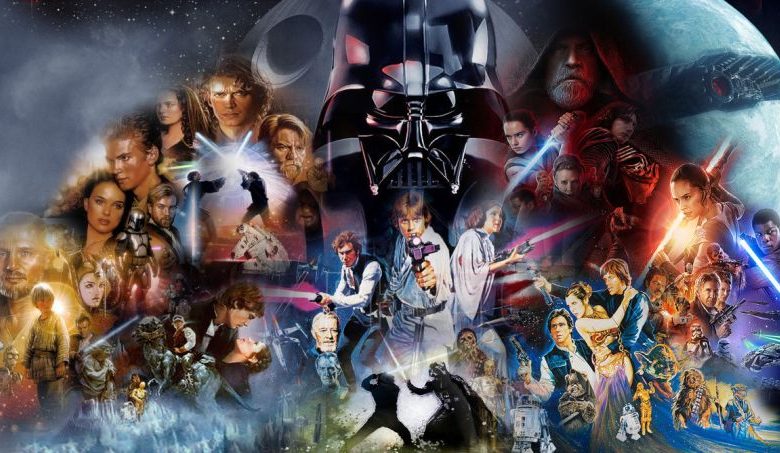
What are some of your favorite moments or characters from the Star Wars films?
There may be a book on it,
This leads me into my first point is that the Star Wars universe is so big. For a transmedia franchise to work, its needs to build on a big franchise. There needs to be layers and segments from established worlds that creators need to work on.
Every single Star Wars film has gaps in its story. Every visual has a element that could be explored and these elements were purposely left untouched during the film making process. The audience can view these segments and even develop their own imagination of that particular element.
What we can learn from this type of world building is that in order to establish a wide and expansive universe, you don’t show everything at once. You focus on the characters story and the main narrative and leave all the other visuals in the frame to the audience interpretation. You don’t focus specifically on these elements.
We can look other examples in today’s industry. The recent Alita Battle Angel (2017), which failed to produce a meaningful franchise. In terms of visual language, it shares a similar thread to Star Wars. Both are visually powerful and have room for expansion. Alita: Battle Angel threw everything at the screen, but I didn’t care about any of the characters. I didn’t remember any of the key terms used in the film. I felt that the film’s main intention was to create more sequels. I didn’t feel connected with the characters and world, but that’s just my reaction.
3) Planets
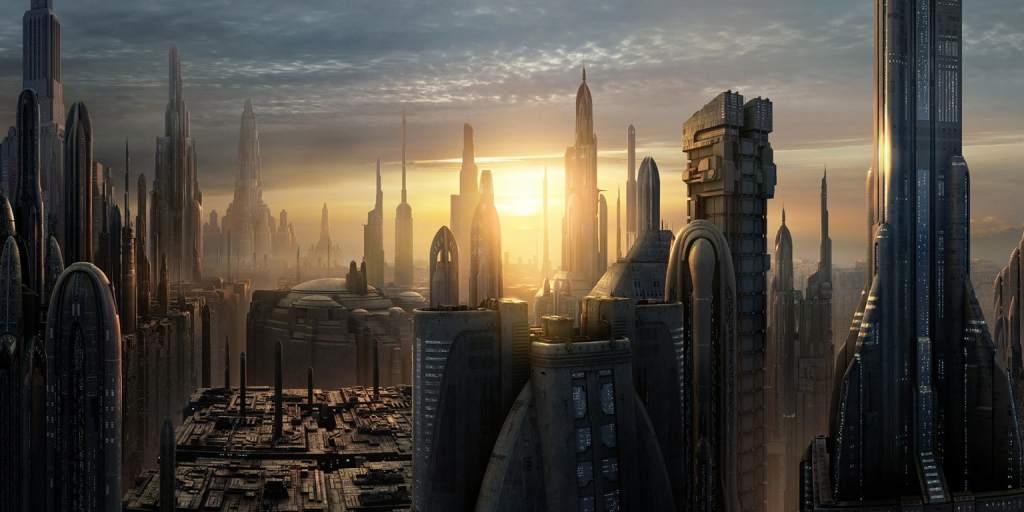
The number of planets and visual layers are endless. The above image is Coruscant, which is m favorite. It resembles a real city environment.
The Iconic Star Wars planets acts as reference points for fans. Whenever a creator focuses on a planet, fans can be reminded of significant events that took place and therefore it begins to paint a picture.
Star Wars has the luxury to focus on now beloved planets. Tatooine is the one of the most significant planets in the universe as it’s where the main hero Luke Skywalker learns the ways of the force and aspires to defeat the evil empire. In Tatooine, the cantina is a place where we see Luke in the original film interacting with iconic characters such as Ben Kenobi and Han Solo. This ties in with the creative framework and vision that George Lucas had when designing these planets, that all of the tiny details that went into the creature designs and location gives expansive potential for written literature.

In terms of written literature, comic books have been one of the ideal forms of story and character expansion. Comic books are also very visual. The selection of characters we get is beyond impressive. As Star Wars fans, we have the luxury of watching a star wars film and remembering one or two characters we love. Then searching for them on comic book stores and reading more about their backstory. It acts both as piece of fandom but also connective tissue.
4) Transmedia expansion
Transmedia works best when it tells a story that is missing from motion picture and or expands a characters story. My favorite character to read about is Darth Vader. The comic books really aim to humanize this iconic and evil cinematic villain. His moral presence was revealed in the ending of Return of the Jedi, overthrowing the emperor to save his son Luke. But the comic book narrative expands on his internal struggles that were once revealed in the franchise. It just adds more layers and it gets you to look at this villain in a more thought provoking way. The most evil man in the galaxy has a human side. Other notable texts include Darth Maul’s back story, which I also recommend.
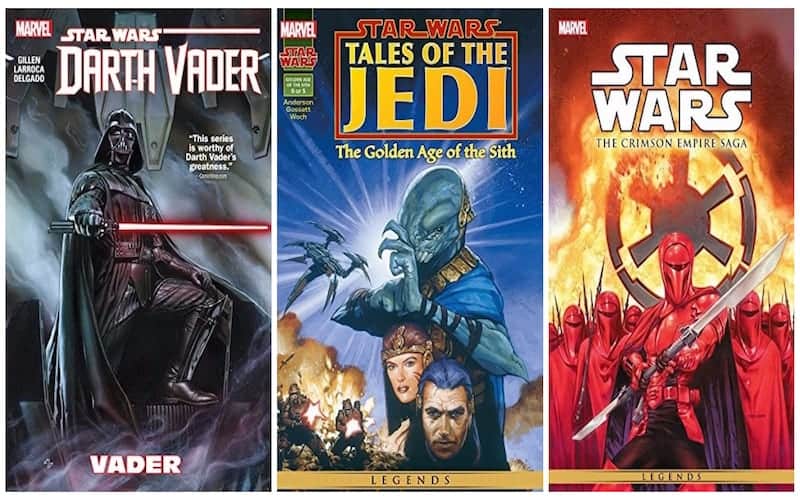
The list of characters are endless. But, you can still read about the series most iconic characters including Darth Vader, Luke Skywalker, Han Solo and more. It may take hours and maybe even years to really sink your head into the Star Wars transmedia universe. At the moment, I do not have the time for that.
For immersive transmedia experience, video games have been very popular. It can get us to explore more areas of the world and be an actual participator. The trailer below is from Star Wars Battlefront 2, which was released in 2017.
We get a variety of characters and well-established maps such as Naboo, Kamino, Tatooine, Crait, D’Qar, Hoth, Starkiller Base and more. All of these maps are contained in the Star Wars timeline narrative, where these maps are a mix between the original trilogy, the prequel trilogy and the new sequel trilogy that started in 2015. The primary game function is the freedom of the player where there is a choice between rebel and sith, which is essentially a choice between good and evil.
5) The wrap up
Star Wars has established itself as a multimedia franchise. As stated in my
intro, the critical factors are its visionary creation of a multitude of planets and characters which has promoted itself towards an expansion for media outlets that can either expand upon an iconic or minor character through a written text or telling its story through a comic book, which has the visual appeal. Every good media text has retained George Lucas’s vision. The conflict between good vs evil.
The concluding point it that the first film had so much mystery and never explained everything that went into the characters backstory. Mystery is the first block to transmedia storytelling. It builds fan anticipation.
If you enjoyed reading this and cant wait to get your hands on a Star Wars comic book, click here.
Author bio

Sam is a content writer. He loves all elements connected with film and writes with passion, always. You can find him on his Linkedin, where you will be able to read more articles. When he is not writing, you can find him practicing football.
 TheReviewAwakens