
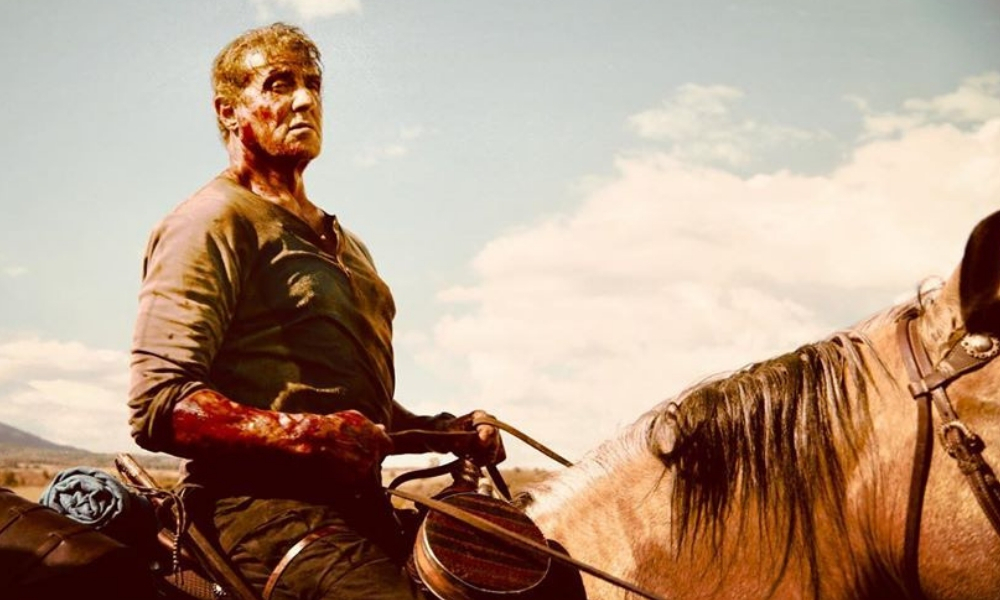
John Rambo has become a statement and an iconic figure in the action genre. On the surfaced, he is portrayed as a one man army but beneath this there is vulnerability.
In this examination, I will be analyzing the male character John Rambo in the popular Rambo series. I will be making a strong case for him representing hegemonic masculinity while carrying traits of internal subordinate masculinity in First Blood (Kotcheff, 1982) as the series progresses in the 80’s he becomes a patriotic figure representing Reagan’s ambitions in his foreign policy, which gives him the name “Patriotic Machismo” (Pinkerton, 2018). The debate I raise is that Rambo goes against the traditional forms of hegemonic masculinity due to contextual factors such as his past experiences with the Vietnam war and how this factor relates to his race and ethnicity as a war veteran, I will delve further into this by discussing our early understanding and the cultural ideology of what the term masculinity means in society and how the character contradicts this statement to an extent.
Throughout the series, the character of John Rambo is portrayed as a silent, stoic, and a strong one-army type of character. One who uses few words to express his emotions but only through physical violence. This may seem like a clear-cut definition of hegemonic masculinity, however John Rambo is a complex male character to analyze. For example, in First Blood (Kotcheff, 1982) we can see both elements of hegemonic and subordinate masculinity being used here, for a start he is seen as an outsider to society, a man who is a Vietnam veteran who is “prone to violence and psychosis” (Tasker, 2015, p. 139) who is also struggling to find his identity and recovering from past traumas, this makes him lonely and isolated, in this matter he is described as “asocial” (Tasker, 2015, p. 139). So far into the film, he doesn’t seem to meet the criteria of a man who is strongly hegemonic as he is filled with internal vulnerabilities and doesn’t benefit from white privilege at all. For example, after the Vietnam war, regardless of ethnicity many American citizens saw veterans as trouble to society either because they were opposed to the general ideologies of the war effort and the idea that they were violent men with violent pasts who couldn’t function normally in society and therefore were seen as a threat to society, when compared to the normal white middle class man who perhaps didn’t fight in the Vietnam war.
As the plot progresses, he travels to the town named Hope in Washington, he is then stopped by the towns sheriff, who questions him and considers him to be unwanted nuisance, when Rambo asks for directions, the sheriff drives him out of town and tells him not to come back. When he returns, the sheriff arrests him on 3 accounts, including him owning a concealed weapon, his knife. He is put in prison and is physically abused which triggers his PTSD from the Vietnam War. He manages to escape and the whole police department are on the look out, whilst Rambo hides in a forest. He relies on his guerilla warfare tactics from his experiences in the war to protect himself against any oncoming police. As the series progresses, he becomes more hegemonic. However, in this circumstance its difficult to make a case as he is a vulnerable character who is a victim of social injustice, which makes it harder for him to carry out the full traits of hegemonic masculinity, he is limited in that sense as he is not seen as a dominant white figure in society. Even the weapons he uses such as his trademark bow and arrow is seen as an association with Native American culture, which there was still oppression towards by the 1980’s. This only reiterates how of an outsider to the general society he is.
However, the fact that he carries a knife with him, is a symbol of prolonged violence and the fact that he isn’t relying on anyone for his survival just him self are symptoms’ of how a man carries himself in the traditional forms of hegemonic masculinity. Its however in the film’s final act where we see a strong trait of subordinate masculinity, once he gets captured he is seen “tearfully speaking about his isolation and the memories that haunt him “ (Tasker, 2015, p. 141) to the character of Colonel Trautman to whom he develops a Father-son relationship with (Tomasulo, 1995), he is also the character that Rambo goes out and saves in Rambo 3 (MacDonald, 1988). This is really the first pure scene in the entire series where we see Rambo emotionally opening up to someone without using physical violence for expression, for the majority of the film he seems to be tough, not just physically but mentally on the outside but expresses his subordinate masculine traits by the finale, Colonel Trautman becomes a father figure and mentor for the next two films.
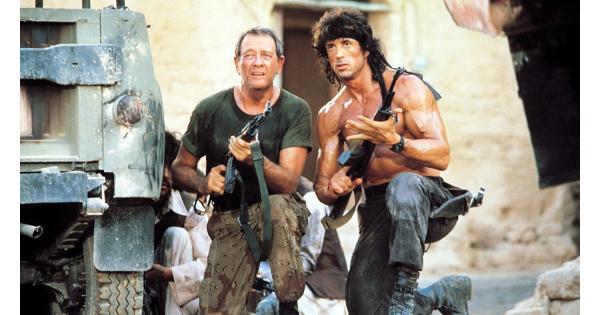
The original meaning of the term masculinity has become culturally recognized in society and cinema, as the man having traits of “breadwinning and manhood” and hegemonic masculinity being the form that is flawed and criticized in terms of its characteristics (Howson, 2006, p. 3) because it lacks sensitivity in the face of human emotions. These definitions are not accurately applicable to the character of John Rambo. The discussion that comes to mind is how do we question and apply these forms of masculinity to a character that goes against the traditional form of hegemonic masculinity in First Blood (Kotcheff, 1982). However, this now leads me nicely into its sequel First Blood part 2 (Cosmatos, 1982) as it differs.
In contrast to First Blood (Kotcheff, 1982), First Blood part 2 (Kotcheff, 1982) has a different connotation to the masculinity portrayed in the first film, largely due to the political context of the films release but also the construction of the plot setting. This time, the government sends him on a top-secret mission to rescue US prisoners in Vietnam, so this time the nation depends on him. Firstly, the film is much more violent than the first film, with this there are more deaths whereas in the first film there was only 1 recorded death. So this suggests that John Rambo has accepted and embraced his hegemonic qualities as a man whereas in the first film he was slightly more conflicted. He is seen in countless scenes with out his shirt, revealing his muscles and physical prowess, which is an example of hyper masculinity, which is also related to traits of hegemonic masculinity, where man embraces his physical appearance and dominance over others. We can see this being represented in many of the films scenes. For instance, he takes down a whole chopper alone with a machine gun.
His physical appearance is a symbol of power, which is a culturally ideological term, society often associates with one of the definitions of masculinity as a separation from femininity in gender construction, the idea of man being physically strong and using that against others in a violent manner, In terms of the context of the film, he is seen as a strong white figure of American patriotism. During the film’s release, Ronald Reagan policies were military oriented and introduced foreign policy, which included factors such as diplomacy, foreign aid and military force. These policies translated itself into Hollywood cinema, especially in the action genre because that type of cinema provokes physical strength and imperial power, it is said that the “action and adventure cinema became increasingly prominent commercially during the 1980’s” (Tasker, 2015, p. 137).
Having said this, there is political subtext in the film where the theme of affirmative security over America’s aggressive foreign policy against other nations are emphasized through Rambo’s ability to kill and hunt against the nations enemies. In that aspect, John Rambo in a wider context is seen as a political tool, “the movie suggests that his violence can be used and controlled by the government” (Tasker, 2015, p. 141). This emphasizes his character representation for hegemonic as there is this a presupposition of man being used as a violent physical tool, one void of emotional needs and expression and that man is most useful in his physical ability. In an article, the characters traits are described as “forceful, determined, and assertive attitude; and his rugged, muscular physique” (Guest, 2017). All of these adjectives are describing a man with no pure human emotions; again this ties with our understanding of manhood and hegemonic masculinity, the idea that man is stoic, physically and mentally tough. Like I have mentioned earlier, these traits are difficult to apply to the character of John Rambo, as yes aesthetically he shows these traits in his ability to pursue his violent missions, save others and his ability to kill but he is a man riddled with internal and emotional vulnerabilities from his past experiences in the war, battling PTSD which is shown throughout the series and his crippling isolation, that often makes him burst with tearful or raging emotions. This is backed up by the argument that the male gender role impacts with male physiology and the way we view Men’s health care (Brooks, 2001) especially regarding men’s mental health. For example, in First Blood part 2 (Cosmatos, 1985) when Rambo saves one of the prisoners, Rambo reaches the extraction point to be picked up by the helicopter, the helicopter though is ordered to abort by a character named Murdock. In the finale of the film, Rambo returns to base with the intention to threaten Murdock with rage and to destroy his office. During this scene, Rambo destroys his office using his machine gun. It could even be suggested that he is a character with internal traits of subordinate masculinity, a tortured man who needs help but expresses these feelings of frustrations through hegemonic matters which adds to the fact that he is seen as a government tool of physical expression. Again, it could be argued that Rambo is a victim of social injustice again as he is left and abandoned in the mission, which is a common theme in the first film which suggests that he does not benefit from white privilege because of the nature of the violent scenarios he finds himself him in.
The fourth installment Rambo (Stallone, 2008) is written and directed by Sylvester Stallone. It evermore emphasizes his isolation as a character. This time the film has a more realistic political setting, set in Burma, which is hailed as a war zone. The plot follows Rambo living in the Thai border; missionaries go and give aid to citizens who are in need. When they don’t return, Rambo takes matters into his own hands. When Stallone was writing the character he commented saying, “he doesn’t like people, he hates the world, he hates himself, his whole life has been a waste” (Andrew Fudge, 2009) in his eyes. Again, themes of internal subordinate masculinity are being used here and the film still contains “strong patriotic and pro-military themes while reaching mass audiences” (Boggs & Pollard, 2008).
However, this film is by far the most violent of the four, it was initially rated NC-17. Its extreme violence suggests its targeted towards a male audience. In this case, there is a debate of whether or not the violence is being played for fantasy pleasure or is it an attempt to provoke and capture the cruelty of the Burma war zone and the internal turmoil that Rambo possesses. This debate ties in with the element that men like seeing violence in cinema and the fact that this series is targeted towards “young adult film goers” (Tasker, 2015, p. 138). This quote suggests that the violence is being used for aesthetic pleasure, more specifically I think this strong use of violence is a cinematic exaggeration of our cultural understanding of hegemonic masculinity, the idea that men need to be violent to express their dominance over others to be considered a success or to be accepted in society. On the other hand, I also believe that Stallone wanted the audiences to feel the cruelty and the impeccable injustice in this war zone. He aimed to do this through extreme violence.
To conclude, John Rambo is a complex character to analyze. One that doesn’t benefit from white privilege throughout the series and shows both hegemonic traits and subordinate traits in the first film, but more so subordinate by the finale. As the series progresses, he becomes much more hegemonic aesthetically due to the political context of Reagan’s presidency, which fits the traditional modes of masculinity such as man being physically strong. However, due to the film’s violent plot settings and location choices, traces of isolation and his PTSD makes him have internal traits of subordinate masculinity that need to be addressed, one that is a victim of social injustice and expresses this through violent matters.
BIBLIOGRAPHY
Carl Boggs & Tom Pollard (2008) The Imperial Warrior in Hollywood: Rambo and Beyond, New Political Science, 30:4, 565-578, DOI: 10.1080/07393140802486260
First Blood Part 2. (1985). (film). Directed by George P. Cosmatos. USA: Anabasis N.V.
First Blood. (1982). [film] Directed by T. Kotcheff. USA: Anabasis N.V.
Fudge, A. [Andrew Fudge]. (2009, Jan 7th). Sylvester Stallone, Rambo. [Video File]. Retrieved from: https://www.youtube.com/watch?v=YndWdtdCg0Q
Gary R. Brooks PhD (2001) Masculinity and Men’s Mental Health, Journal of American College Health, 49:6, 285-297, DOI: 10.1080/07448480109596315
Guest. (2017, Jan 17th). Bodies of Power: Masculinity and Femininity in ‘Rambo: First Blood Part II’ and ‘Aliens. Retrieved from: https://www.thefilmagazine.com/bodies-of-power-masculinity-and-femininity/
Howson, R. (2006). Challenging hegemonic masculinity. [electronic resource]. London ; New York : Routledge. Retrieved from http://search.ebscohost.com/login.aspx?direct=true&db=cat01619a&AN=up.1248851&site=eds-live
Rambo 3. (1988). (film). Directed by Peter Macdonald. USA: Carolco Pictures.
Rambo. (2008). (film). Directed by Sylvester Stallone. USA: Lionsgate.
Tasker, Y. (2015). The Hollywood action and adventure film. Malden, Massachusetts : Wiley Blackwell. Retrieved from http://search.ebscohost.com/login.aspx?direct=true&db=cat01619a&AN=up.1218305&site=eds-live
Tomasulo, F. (1995). Film Quarterly, 49(1), 47-49. doi:10.2307/1213498
 TheReviewAwakens